Friday, June 30, 2006
Spoonerisms
Walking down Mission Street to the bus I was behind three men, one of whom was carrying a 24 pack of beer at 8am. "He said he was taking a sow of violence but then at the meeting he got in a big yelling argument with Henry".


Tuesday, June 20, 2006
Kid Lore
When I take the bus to work I usually pass a group of kids and parents waiting for the Davenport bus on Mission Street. Whenever a truck drives by the kids pull down on an imaginary cord in the air asking the truck drivers to blow their air horns.
We used to do this when I was a kid. Only on in 5-10 truck drivers responded then. These kids got replies from almost every truck.
What I want to know is, was this kid lore passed down from parent to child or from kid to kid? If it is from kid to kid, that means there is an unbroken line of kids from at least the 60s until now who passed this on. What other kid lore is passed on like this?
Do trucks still have cords to trigger their air horns or do they now all have buttons?
We used to do this when I was a kid. Only on in 5-10 truck drivers responded then. These kids got replies from almost every truck.
What I want to know is, was this kid lore passed down from parent to child or from kid to kid? If it is from kid to kid, that means there is an unbroken line of kids from at least the 60s until now who passed this on. What other kid lore is passed on like this?
Do trucks still have cords to trigger their air horns or do they now all have buttons?
Sunday, June 11, 2006
How can we maintain the best of the past in the face of progress?
Something Rick Steves said in one of his books has been running through my head the past few weeks. He said that he looks for the towns in Europe which were once very prosperous and then went through a period of decline. During that decline, the people in those towns were not able to replace old buildings or remodel them significantly so those towns are the most unchanged from the way they were centuries ago.
Applying that idea to California, that is why so many Gold Country towns are so charming. They were incredibly wealthy a hundred years ago but that wealth went away and many of them have been without new sources of wealth since then so they are relatively unchanged compared to most towns in California.
It is important to watch out for the opposite of this. When a town starts becoming prosperous again, it is all to easy to quickly lose the best of what remains from the past.
Unfortunately this is what started to happen to Santa Cruz beginning in the sixties. The town started becoming more prosperous than it had in the past. Not very quickly, but consistently over the course of a few decades. Although I have not investigated it, I believe part of this new wealth came with the increased use of cars and the ease of travel this gave to day trippers who come to Santa Cruz from the Bay Area.
Part of it came from the University.
As that wealth came into town, some buildings were replaced with other buildings which allowed more profitable commerce. The galleria and the riverfront plaza probably allow for more efficient concentration of wealth than the chinatown area that used to be there.
As more people filled the town, the charming Carnegie library had to make room for the larger modern monolith that now serves us. The Hihn mansion had to make way for the now city hall that replaced it.
While the silicon boom was happening, the anticipation of millions to be made from courting lots of electronics companies downtown prompted the replacement of buildings like the Cooperhouse with the top-heavy monstrosities that now dominate downtown, full of probably underutilized office space.
Other small towns should be alert to this possibility when the start to become prosperous. It may be inevitable that some changes will happen to these towns, but if they are aware of it, perhaps they can mold it so they can keep as much of the good that exists from their town's past and meld it with the good of their future.
But where does this leave Santa Cruz?
Much of what was good from our past is gone but there are isolated fragments that still hang on. We need to cherish those fragments and find ways to incorporate them into the fabric of our evolving economy. We need to find ways to keep them profitable, for things which are profitable are more likely to survive.
How much different would our town be today if the Hihn mansion still existed with a civic center built up around it? Or if the McHugh and Bianchi building were still in place (although I am skeptical it could have survived the quake) ?
What places do we need to preserve and how can we preserve them?
Applying that idea to California, that is why so many Gold Country towns are so charming. They were incredibly wealthy a hundred years ago but that wealth went away and many of them have been without new sources of wealth since then so they are relatively unchanged compared to most towns in California.
It is important to watch out for the opposite of this. When a town starts becoming prosperous again, it is all to easy to quickly lose the best of what remains from the past.
Unfortunately this is what started to happen to Santa Cruz beginning in the sixties. The town started becoming more prosperous than it had in the past. Not very quickly, but consistently over the course of a few decades. Although I have not investigated it, I believe part of this new wealth came with the increased use of cars and the ease of travel this gave to day trippers who come to Santa Cruz from the Bay Area.
Part of it came from the University.
As that wealth came into town, some buildings were replaced with other buildings which allowed more profitable commerce. The galleria and the riverfront plaza probably allow for more efficient concentration of wealth than the chinatown area that used to be there.
As more people filled the town, the charming Carnegie library had to make room for the larger modern monolith that now serves us. The Hihn mansion had to make way for the now city hall that replaced it.
While the silicon boom was happening, the anticipation of millions to be made from courting lots of electronics companies downtown prompted the replacement of buildings like the Cooperhouse with the top-heavy monstrosities that now dominate downtown, full of probably underutilized office space.
Other small towns should be alert to this possibility when the start to become prosperous. It may be inevitable that some changes will happen to these towns, but if they are aware of it, perhaps they can mold it so they can keep as much of the good that exists from their town's past and meld it with the good of their future.
But where does this leave Santa Cruz?
Much of what was good from our past is gone but there are isolated fragments that still hang on. We need to cherish those fragments and find ways to incorporate them into the fabric of our evolving economy. We need to find ways to keep them profitable, for things which are profitable are more likely to survive.
How much different would our town be today if the Hihn mansion still existed with a civic center built up around it? Or if the McHugh and Bianchi building were still in place (although I am skeptical it could have survived the quake) ?
What places do we need to preserve and how can we preserve them?
Wednesday, May 31, 2006
The Emeryville Image Show
Last weekend I went to the Emeryville Image Show
(http://www.mpmpresents.com/index.html). Collectors of all sorts of images sell there.
I am thinking I might enjoy collecting old images and maybe having a small side business selling them. Much easier to store and ship than camera equipment. I was most taken by the stereoview I saw there. I'll post the few stereo cards I purchased when I get a chance. I didn't find any of Santa Cruz or Alum Rock Park which I was most looking for but I did get a nice stereoview of the first Cliff House and one of Half dome as well as some others.
Here are a few post cards I got there.
 I don't know if this is the same pier that is in SC now but it looks to be in close to the same place.

Pacific Avenue in the teens or twenties.
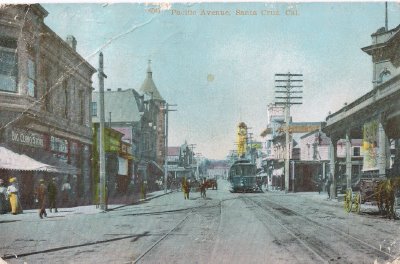 Looking back the other direction on Pacific.

Next is the Cooper House. I would like to find a better picture of the whole thing but this should do for now.
(I really need to get a better blog host. For some reason Blogger wont let me put the text where I want it. Argh.)
 Natural Bridges when there were still two bridges. I'm looking for a picture from the other side.
 Lighthouse Point before they put in most of the fences.
(http://www.mpmpresents.com/index.html). Collectors of all sorts of images sell there.
I am thinking I might enjoy collecting old images and maybe having a small side business selling them. Much easier to store and ship than camera equipment. I was most taken by the stereoview I saw there. I'll post the few stereo cards I purchased when I get a chance. I didn't find any of Santa Cruz or Alum Rock Park which I was most looking for but I did get a nice stereoview of the first Cliff House and one of Half dome as well as some others.
Here are a few post cards I got there.
 I don't know if this is the same pier that is in SC now but it looks to be in close to the same place.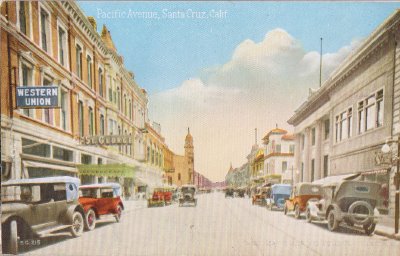
Pacific Avenue in the teens or twenties.
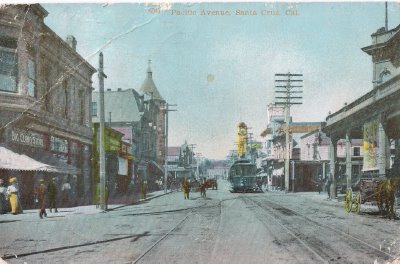 Looking back the other direction on Pacific.
Next is the Cooper House. I would like to find a better picture of the whole thing but this should do for now.
(I really need to get a better blog host. For some reason Blogger wont let me put the text where I want it. Argh.)
 Natural Bridges when there were still two bridges. I'm looking for a picture from the other side.
 Lighthouse Point before they put in most of the fences.
Monday, May 22, 2006
Big Sur, Big Creek Reserve
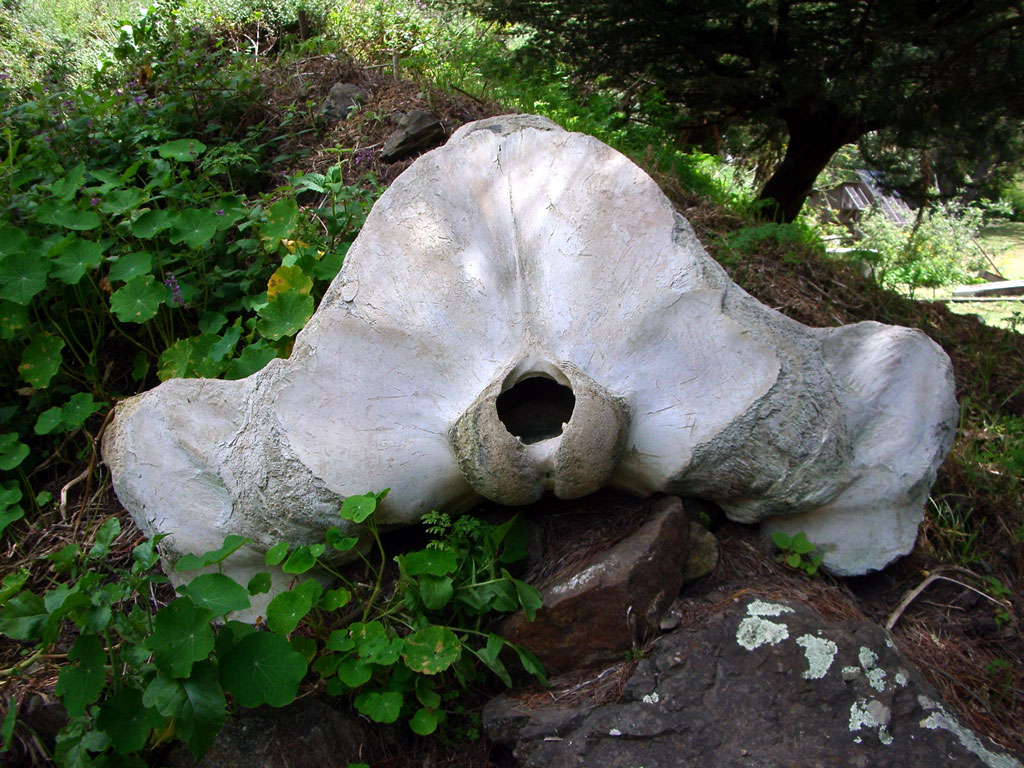


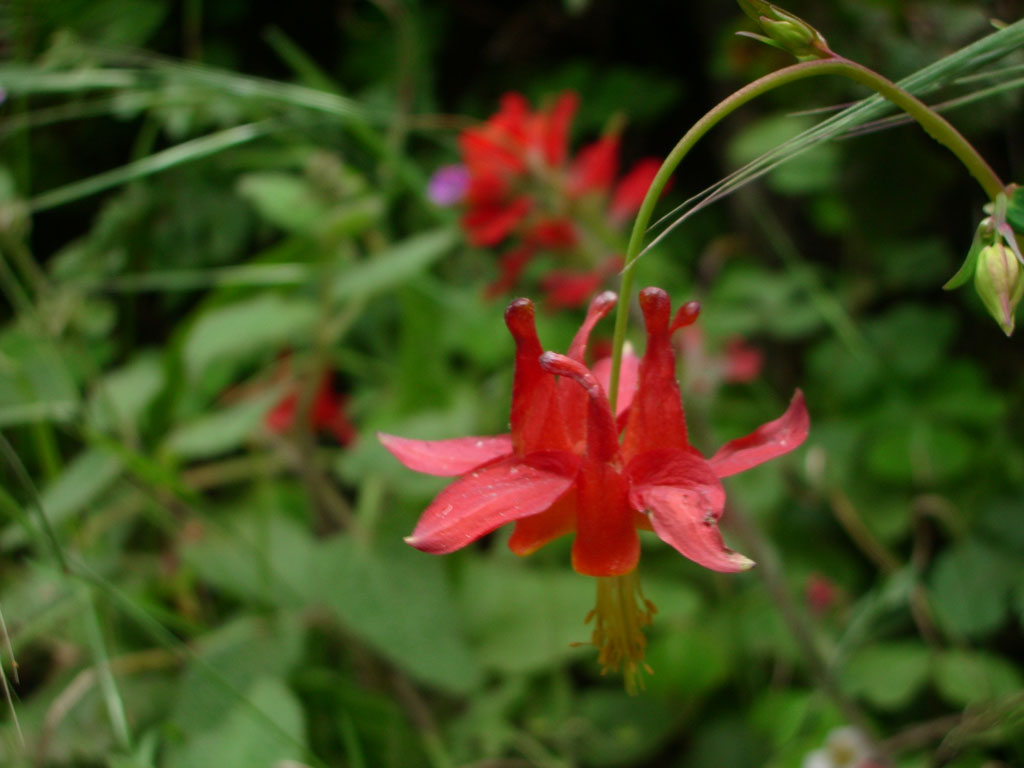


We spent the past weekend camping in Big Sur and walking in the Big Creek Reserve. Normally Big Creek is closed to the public but Saturday was the second annual open house. It looks like this will happen every first Saturday after Mother's day from here on out. I highly recommend it.
Here are a few photos from Big Creek. More are
available at:http://www.kodakgallery.com/I.jsp?c=sh9x23e.9psignei&x=1&y=faf6f3 and http://www.flickr.com/photos/56679160@N00/sets/72057594142901641/
Thursday, May 18, 2006
Nina Paley's latest: Sita sings the Blues
I first fell in love with Nina's work when she did a strip in a local tabloid called: "Nina's Adventures in Santa Cruz". Here is her latest. Pretty wild. Caution: Graphic cartoon violence in the second half. Watch out if you get upset seeing poor little cartoon characters eat it.
http://www.ninapaley.com/2006/05/fakin-it.html
http://www.ninapaley.com/2006/05/fakin-it.html
Sunday, May 14, 2006
Let Abbey Road Be
 Although I have always been a Beatles fanatic, I have never really realized how much a part of the lives of my generation they have been (even for the people who were not Beatles fans) until recently while I have been enjoying the performances that the White Album Ensemble has been giving of all of the albums the Beatles never performed live.
Last night we went to their performance of "Let Abbey Road Be". The last of those albums at the Rio. It was wonderful as all of these have been.
Sorry for the blurry snapshot but hopefully it gives a little sense of the feeling of the concert.


Monday, May 01, 2006
Ducky Derby
 A great charity event if you have kids.
I was told that originally they floated all these rubber ducks down a section of the San Lorenzo river by the beach but one year a surge pushed them all on shore so they now use this artificial stream in Harvey West.
Garfield Park Library
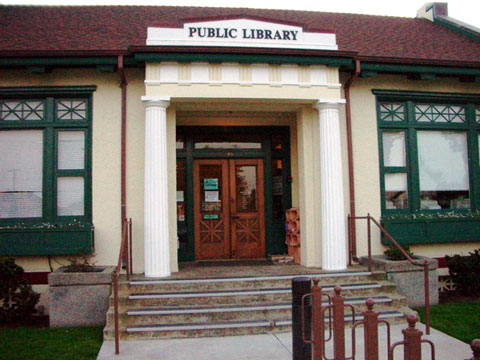 The Garfield Park Library is one of a number of public buildings in Santa Cruz designed by William Weeks. I believe the sign said it was built in 1914.
This is exactly what I think a neighborhood library should be. Handsome and inviting from the outside, cozy on the inside. perfectly in scale with the westside "circles" neighborhood.
Under the tree in the lawn there is a plaque that we had never noticed before saying something like: "Stop here and say a prayer for peace." Donated by the local VFW chapter.(!)
Bay Mission Market Gone?

The Bay Mission Market (at the corner of Bay and Mission of course) has long been a Santa Cruz fixture albeit a funky one. I remember a newspaper article about it when I was a student in the late seventies. The reporter had found products on their shelves from the early sixties containing cyclamates which had been banned 15-20 before.
I have wondered how it has stayed in business so long. the past few years it seems mostly to subsist on alcohol sales from the look of the ads that were in the window.
Walking by it to the bus stop this morning I saw this sign in the window. The insides are pretty much gutted.
I wonder if they are just remodeling, putting it up for lease or turning it into another type of business entirely. It has always seemed to me much too valuable a piece of real estate to let deteriorate the way it has. If it was a real grocery store it would be very convenient for UC students to pop down and buy groceries rather than heading all the way into town. I know there has been a shopper shuttle that goes down to Mission Safeway but this would be an easy straight shot down Bay via bus or car and would also be easier for newbies to find.
Turkeys in Santa Cruz?
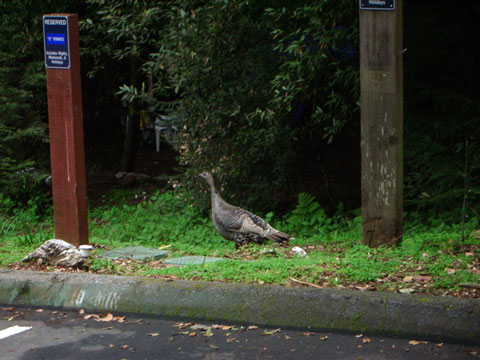
This is the first time I have ever seen a turkey in Santa Cruz. It was wandering aroung the parking spaces for the Chancellor's office at the top of the festival glen. We saw a bunch of wild turkeys up in Clearlake a few weeks ago. I wonder if the extra rain this year is providing more food for them and increasing their population?
Thursday, April 27, 2006


Sidewalk Signs
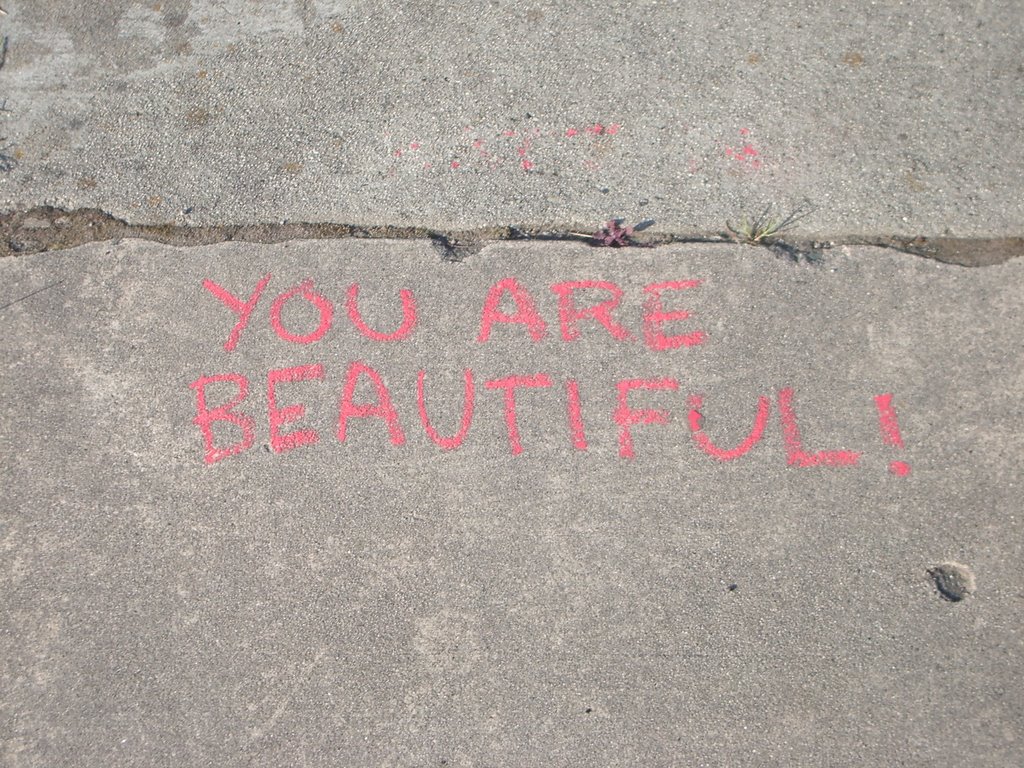
I love this line that I found on the sidewalk on my way home the other day walking up Seaside. There were other chalk drawings on the walkway of one of the houses but this was the only thing on the sidewalk itself and the only one not in white chalk.
Monday, April 24, 2006
Santa Cruz Urban Archaeology Series #1


Palm Drugs used to be on Mission Street at the end of Palm Street. I don't know if they went under because Longs opened next door to them or before longs went in. The building is now a video store but the paint is starting to peel off the side of the building where the old sign was so you can see the words: "Palm Drugs" underneath. Across the street is the recently remodeled Palm Center looking very spiffy.
Tuesday, April 18, 2006
Clearlake
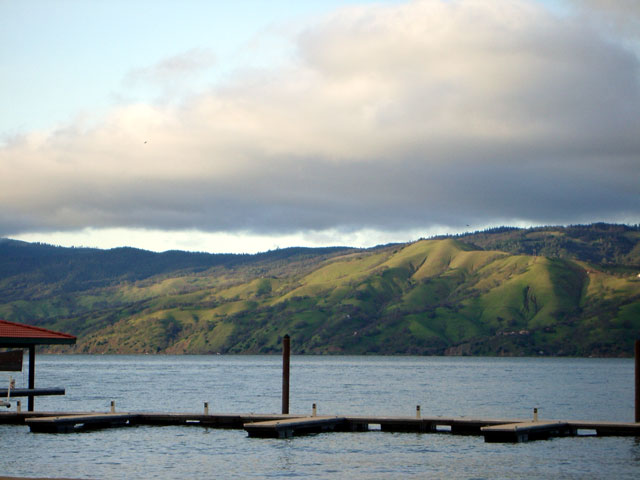
My partner, R. , and I went up to Clearlake last weekend. Here are a few of the (as usual) zillions of pictures I took while we were up there.
Her band was supposed to play at an adoption party up there but it was cancelled because all the rain we have been getting has caused the lake to come up way above its usual level so the pier they were to play on and half the parking lot of the hotel were flooded.
So we got a nice 3 day vacation instead.
This first picture is of "Old Faithful" geyser in Calistoga on the way up there. I always assumed that there was only one "Old Faithful" but apparently it is a classification having to do with the regularity with which they erupt. As well as this one and the one in Yellowstone there is apparently one in New Zealand.

They have various goats, sheep and llamas there too...

Here is a poster of what the geyser looked lik in the 50's

 The Buckingham country club in Soda Bay on Clearlake. Rather windy that day. I've always loved weeping willows. We had one in the first house we rented in northern California when I was two. Its branches hung down to the ground and I always wanted to hide under them to play but the older kids told me there were snakes under it. Usually I like ultra sharp photos but even though this one is a little soft from the wind and the gathering dusk, there is something about it that really appeals to me. The movement of the branches, the glowing impressionistic color of the tree and the grass.
We hiked around Clearlake State Park just outside of Soda Bay. As with many places around the lake,
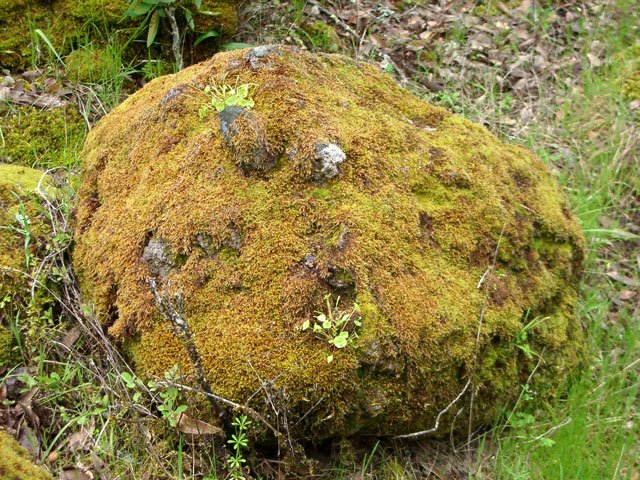 the park was rather flooded. Most of
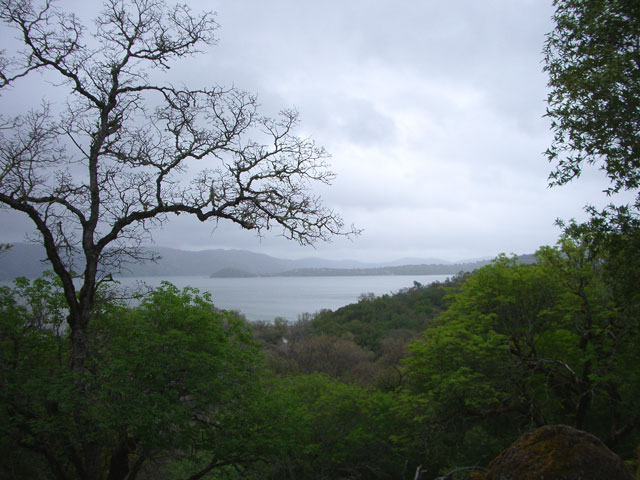 the camp sites were closed because they were under water. the Dorn nature trail was very nice with good
 views of the lake and the general area
 as well as beautiful details such as these moss covered rocks and various wildflowers.
I love this one with the miner's lettuce growing out of it.
You can see more of these pictures at: http://www.kodakgallery.com/I.jsp?c=sh9x23e.71cn1jey&x=0&y=-vw850o . Click on the button at the bottom right that says: "view photos without logging in" if you don't want to set up an account on Kodak's site. I'll post the rest of the good ones there when I get a chance.
Tuesday, April 11, 2006
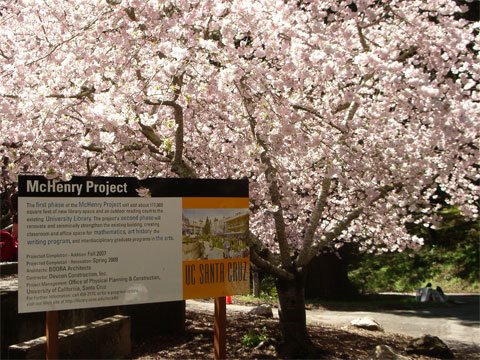
The Cherry Blossoms are Back at McHenry

The Cherry Blossoms are back.
But sadly some of the trees are gone to make room for the new library addition.
The Food Bin Sign, a Santa Cruz Icon

The Food Bin and Herb Room are great stores. If you ate vegetarian you could probably buy everything you need from the Food Bin. Open late, 11pm I think. Been here for decades, a real Santa Cruz institution.
Their sign on Mission street is definitely an SC icon. This is not one of their greatest lines but it is representative. I'll put up more as I find them.
Friday, March 17, 2006
Kresge College Memories Part 2
Here is a flickr set I am starting about Kresge. I'll add more as I go along.
http://www.flickr.com/photos/56679160@N00/sets/72057594084492705/
My first year at Kresge, 77-78, There were still many students seniors and juniors living on campus. The rents were cheap then and because of the low enrollment at UCSC in general, it was easy to get a spot on campus. When I came back in 81 after spending a few year at Foothill College and San Jose State, it was much harder to stay in on-campus housing your whole four years. This, combined with the fact that most of the people who founded Kresge had left and that the campus was involved in a major push to make its image more conservative, meant that there was little continuity and the students who came in later had very little connection to or understnding of the original goals of the college.
I myself had only a hazy understanding of it due to the factors I mentioned in part one of this story. Bateson had left Kresge the year before, only Michael Kahn was left of the prime movers and I think he was a little weary of the experiment.
http://www.flickr.com/photos/56679160@N00/sets/72057594084492705/
My first year at Kresge, 77-78, There were still many students seniors and juniors living on campus. The rents were cheap then and because of the low enrollment at UCSC in general, it was easy to get a spot on campus. When I came back in 81 after spending a few year at Foothill College and San Jose State, it was much harder to stay in on-campus housing your whole four years. This, combined with the fact that most of the people who founded Kresge had left and that the campus was involved in a major push to make its image more conservative, meant that there was little continuity and the students who came in later had very little connection to or understnding of the original goals of the college.
I myself had only a hazy understanding of it due to the factors I mentioned in part one of this story. Bateson had left Kresge the year before, only Michael Kahn was left of the prime movers and I think he was a little weary of the experiment.
Subscribe to:
Posts (Atom)